Monday, October 8, 2018

The Royal Observatory: Home of Greenwich Mean Time (GMT)

The royal observatory in Greenwich is situated on a hill atop Greenwich park, facing the River Thames. This was where the Greenwich Mean Time (GMT) standard originated from, with the prime meridian line passing through its premises.

 Royal observatory

Just so you know, the prime meridian line is an imaginary line that divides the eastern and western hemispheres of the globe (similar to how the equator divides the northern and southern hemisphere). It has a longitudinal value of 0° and is used as the zero reference point for many countries in the world to keep time on - based on GMT conventions.

Meridian line guide

Furthermore, the prime meridian line was used in many observations relating to astronomy - past and present.

Prime meridian line (0° longitude)

It was pretty cool to see inscriptions around the line showing the longitudinal value of different countries that varied from this particular reference point.

There was also a 24-hour Shepherd gate clock outside the observatory, which was the first ever clock to display the Greenwich Mean Time (GMT) directly to the public.

24-hour shepherd gate clock

The shop was actually selling a replica of this for £150!


If your interested, there's a full audio guided tour throughout the observatory which shows the history of how people from the past made use of astronomy to tell time. There was also an illustration of how the methods evolved from the usage of 'mechanical' gears and gadgets to the technologies we have today.

 Past dial clocks


Being there was definitely an eye opener for me. If I were to ever do any kind of GMT time conversion again, I'd have a greater appreciation of its significance, rather than blindly converting it like before.

The National Gallery, London

Founded in 1824, this monumental building is situated in Trafalgar square and houses a collection of over 2,300 paintings dating from the mid-13th century to 1900.

National Gallery

A better thing about this place was that entry was totally free. I'm not a huge advocate for art, but seeing that admission was going to cost me nothing, why not?

The interior was very fancy and reminded me of the Louvre in Paris. It had a very elaborate designed that not only looked modern, but kept historic design aspects in its interior decor.


As I walked around the place, looking at the paintings which I admittingly cannot appreciate as much as some of the people around who were more into art, I still managed to catch glimpse of a few that I thought looked 'famous' or 'familiar':

(William Shakespear, 1600-1610) - National Portrait Gallery

(Water Lily-Pond by Claude Monet, 1899)


(Sunflowers by Vincent van Gogh, 1888)

For every picture,
there's a short explanation beside them to highlight how it was painted and what elements certain elements in the drawing represents. If your really into it, you could probably get one of the museum personnel to give you a more detailed explanation. 

All in all, it was a worthwhile place to visit, regardless of whether your actually into art or not. I'd say that if you have the chance, do give it a go.

Monday, August 27, 2018

Journey to Trolltunga

Background info 

Trolltunga or troll's tongue, is a rock formation situated approximately 1,100m above sea level within the mountainous regions of Odda.

This was my second time visiting Norway, as Jun-Aug was the right and safest period to do the hike. The previous time I was there, I was further up north in Tromso during the winter seasons. If you'd like to check out my experience then, click here.

To me, the location of trolltunga felt inaccessible as there seemed to be no direct, clear-cut way to the area. The nearest accommodation was either in Odda or Tyssedal, which in itself was a 2-3hour drive from Bergen airport. You'd also need to catch a ferry mid-way to take your car across the waters. If your driving at a time where there is no ferry, you'd have to take a substantially longer route through Hardanger bridge. From the accommodation, it was approximately a further 30min drive to the start point in Skjeggedal.

The above point is all under the assumption that your renting a car. I've got no idea on how the buses and cab rights are like to cover the Bergen - Odda/Tyssedal - Skjeggedal route.


The hike

Started at 6am with only 1.5h of sleep, which sucked. It took me around 3½h to reach the end zone, which felt a lot longer as the hike was more demanding than I thought. Nevertheless, making it to the top is always a nice feeling to have.

 Trolltunga

Standing at the ledge


Take-away thoughts

I've actually had loads of 'first times' in this trip, making it a more heart-pumping and interesting (though traumatic at times) adventure. Here's a list of them:

- Renting, driving on the right and maintaining a car overseas (ford focus rocks btw)
- Driving in pitch-black darkness on narrow mountain roads, with little street lights
- Doing a 'big hike' with no guide.
 

Lots of things could've gone wrong here if some mishap were to occur anywhere, but thankfully nothing serious happened. Overall, the experience was a good eye-opener for me and has taught me a lot more about myself. Cheers to that!

Saturday, August 18, 2018

Stonehenge visit

The Stonehenge is an iconic symbol of England, with a history spanning 4,500 years (built in phases from 3,000 - 2,200 BC). It is a wonder of the world and an incredible piece of pre-historic architecture. It has gone through several phases of wear, tear, preservation and reconstruction over time to become what it is today.

Getting to Stonehenge is pretty straightforward from London, as there are multiple travel agencies that organise round trips to the site. Simply book online, show up at the coach station and your on your way! (It's about a 2 hour trip from London)

 My experience with Premium Tours was smooth and overall, positive.

At the heritage site itself, you'd be provided with an audio guide and map after getting your tickets.

Stonehenge - front view

Stonehenge - side view

Stonehenge - back view

At first glance, it's just a bunch of rocks stacked upon each other. But did you know, this structure is the only stone circle in the world to have lintels - the horizontal stone sitting on top of the uprights. The rocks were also strategically placed to align itself with the movements of the sun.

Mysteries still remain about the Stonehenge today. Specifically, why it was built or how it was used. Scientists, archaeologists and academics have theorised that it was possibly used as an ancient burial ground, but no one knows for sure.

Apparently, segments of the Stonehenge, all the way down to individual rocks are believed to be used for very specific reasons. I didn't pay too much attention to them, but I'd say if your really interested, listen closely to the audio guide and you should be able to have a clearer picture on what the various sarsen stones represent.

 
Prehistoric grounds, modern man!

The place was quite packed with tourists and you could really only walk around a barricade. I believe that there are options to actually go onto the site grounds, but these private tours are only on specific days of the year and are quite expensive to book.

At the end of the walk, you'd head back to the 'reception' site and exit the area through the food/gift shop. There is also a little exhibition area at the end to elaborate more on the Stonehenge's history and the life of the people who lived then.

Rock chocolate souvenir

Seeing that everything around were rocks, why not pick up some rock chocolate sweets from the gift shop to munch on on the way back? :)


Stonehenge is a prime example of a place where there is more to it that meets the eye. I'd say that its definitely worth the visit.

Friday, June 1, 2018

Tastes of the Borough Market

Building up on the 'Exploring London' & 'Camden Market food visit' entries, here's another one of my food expeditions to London's Borough Market.

The Borough Market is one of the oldest food markets in England, dating back to at least the 12th century. Located next to London Bridge, it houses many stallholders who are farmers, fishermen or producers themselves, selling some of the freshest food you can find.

Entrance

Market floor

The place in itself is pretty tourist-concentric, but nevertheless, the extra pennies was nothing compared to the fresh amazing delights the place provided. Here's some of the stuff they had:

Fresh vegetables

 Fresh fruits

Cheese!

Fish display

Seafood array

Fresh oysters

I've had a go and tried 2 huge Poole Harbor wild rock oysters right off the rack, and I must say that it still had the freshness of the sea still in 'em.

 Cooked scallops

 Paella

 Meat & poultry

Artisan breads

Alcohol display

Fruit cups

I had a great time here as it gave me a good British, market-trading like experience. The foods that you could get were really tasty as well, albeit slightly pricey. If circumstances permit, I may even be back here again to get some of the rawer meats, so that I may bring' em back and prepare them on my own.

Overall, the great food and accommodating vendors, amidst mid-town London makes this market the perfect spot for anyone looking for a nice gourmet get-away experience.

Monday, May 28, 2018

Food conquest at Camden Market!

As a continuation from my previous post on 'Exploring London', I've actually gotten some time to visit Camden Market, one of the city's largest shopping and food district.

Market entrance

Food and shopping areas

The place was jam-packed with loads of street stores and peddling merchants selling all kinds of trendy items and delicious snacks. Regardless of your age, culture or tastes, there is definitely something for you here.

My personal visit here consisted mostly of an eating spree of whatever that looked nice, which was unfortunately, almost everything I saw. Here's a flavor of some of the stuff they had:

Japanese katsu snacks

Churros

Fish & chips

 Pork, chicken and mushroom buns

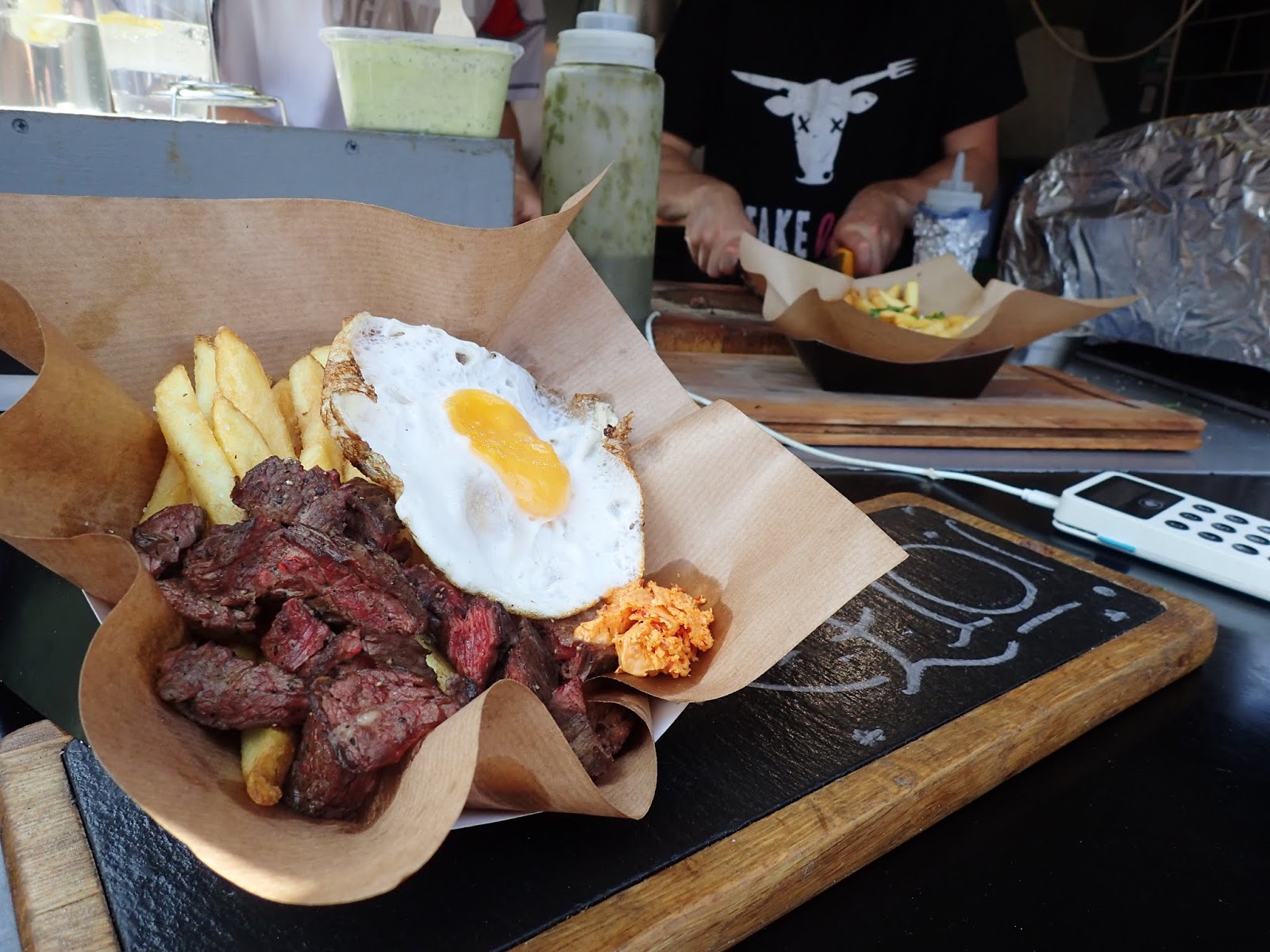
Steak meals

Barbecue chicken sticks

Fruit drinks

Mango lime juice

Szechuan delights

Banana waffles

My only real regret here was that I did not have the stomach capacity to taste more of the stuff that I saw towards the end. I'm sure to be back here someday to set the score straight  and savor all the other foods this vibrant market has to offer!

Monday, April 23, 2018

Spain: Granada & Malaga

Granada is a gritty, compelling city of Spain with deeply rooted architecture, sprawled at the foot of the Sierra Nevada mountains. The area was the last stronghold of the Spanish Moors and their legacy lies all around it - from the allure of the Alhambra, to the vibrant street life packed with tapas bars, bohemian cafes and flamenco clubs.


 Living at a Monastery

My living area this time was pretty 'different' to say the least. I was situated in a dormitory at an accommodation block beside the church of Santo Domingo in Granada. Living conditions were pretty offbeat, but the unique experience and captivating environment of the area were more than enough.

 Santo Domingo church

 Accommodation area

Main garden

Side walls

Bedroom

You are almost always greeted in Spanish by people around the living quarters, which gave it a really jovial and light-hearted atmosphere. If you're lucky, you can even catch the friendly priest passing-by.


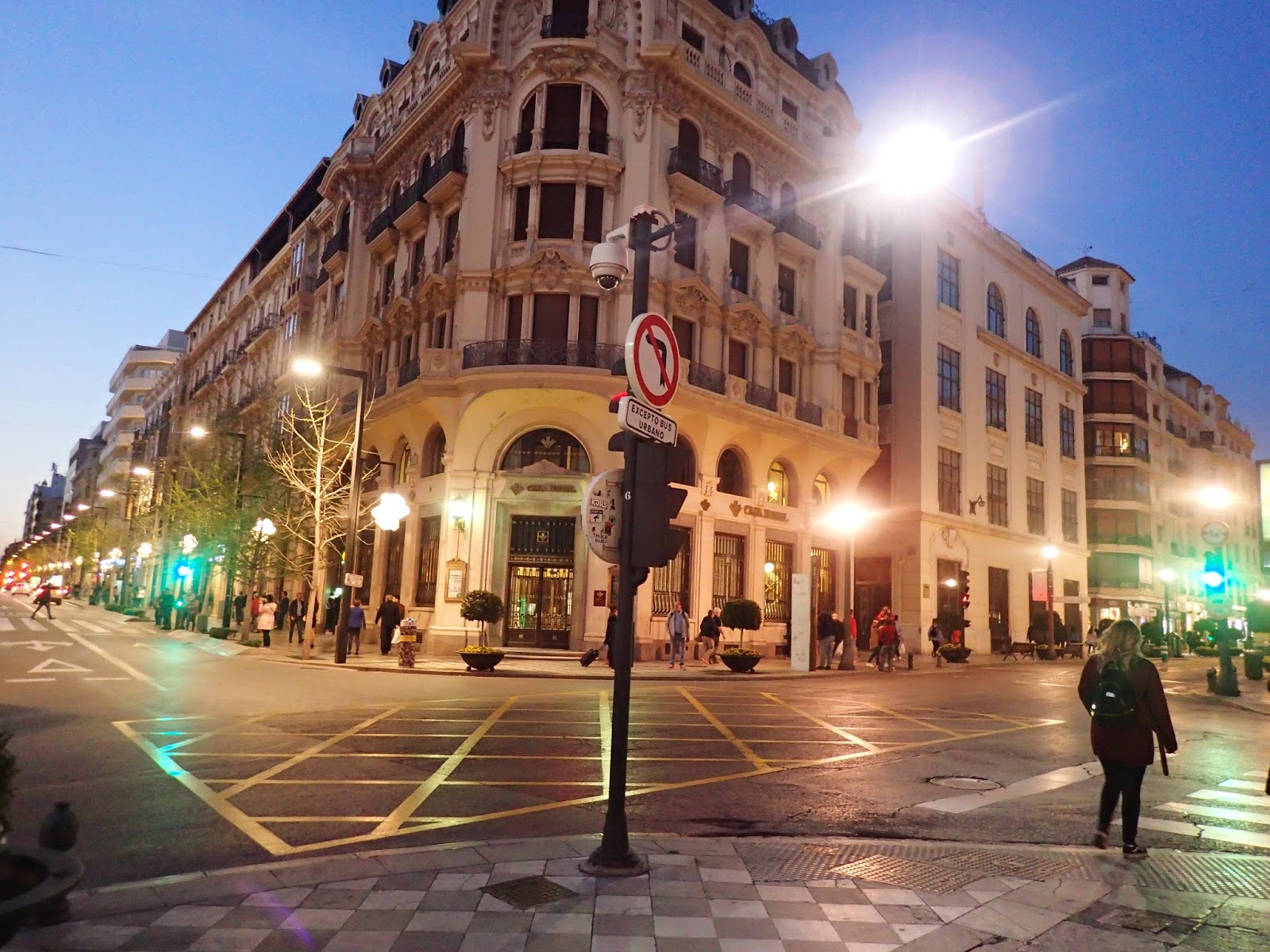
Streets of Granada

Had a very lovely local lady, Maria that showed us around and was very informative in explaining to us the history of the area.

 Day view

 Night view

 Narrow alleyways

 Houses

 'Street performers'

 'Secret' alleyways

 Campo de los Martires

Some roads were also not made out of traditional bitumen like in modern cities, but were instead constructed with cobble and stone.


Alhambra

The Alhambra is a UNESCO world heritage site from the 9th century, where Granada's Nasrid rulers in the past, used it as a fortified palace complex. It is also currently the only preserved palatine city of the Islamic period and constitutes the best examples of Nasrid art in  its architecture and decorative structures, making it one of Spain's most high-profile attraction.

Prior to visiting, I never expected this Spaniard area to have so much roots with Moor history.

Full view of Alhambra

Palace buildings

Flower garden

Military base

'Love' Tree

Apparently, if you stood or sat under the shadow of the tree and thought of someone you liked, it was an auspicious act for good things to happen between you and him/her.

 Bell tower

Bell tower (close-up)

View of Granada from the Alhambra

Smiling for the Camera :)

Fountain gardens

 Walkways through nature

Coliseum of Alhambra

Moorish carvings

Lion fountain

As you might have noticed, I've obviously 'winged' out some of the description as I've forgotten the actual names of the areas. 

I'd also suggest that you take a guided tour through the place, to have a better understanding as to what your looking at. Also, be prepared to walk for hours on end if you'd like to see everything here.


Flamenco Club

Flamenco clubs are a dime a dozen in Granada, serving food and drinks in view of an eye-catching and intense performance.

The flamenco, is a form of song, dance and instrumental (mostly guitar) music commonly associated with the Andalusian Roma (Gypsies) of southern Spain.

There are usually three roles in a typical group. The 'kante fla' (singer), the toque (guitarist) and baile (dancer). Because the dancer is in the front and center of the performance, people may often assume that the dance is the most important aspect of the art form, but in fact, it is the 'kante fla' (singer) that is the heart and soul of the act.

The 'kante' (left), 'toque' (middle) & 'baile' (right) of the Flamenco Performance

The three people that performed were really adept in their respective roles. The 'kante' (singer) was literally clapping, stomping her feet and hitting all kinds of high notes. 

The 'toque' (guitarist) showed tremendous amount of skill on the guitar (I can tell, cause I do play the guitar as well). 

As for the 'baile' (dancer), she had such an intense and eye catching dance, fiercely stomping away on the stage, letting her emotions pour out to the audience (at least it had that effect for me).

'Baile' (dancer) taking center stage

I highly recommend anyone visiting Granada or Spain in general to get yourself involved in one of these performances. The intensity of it will stick in your mind for sure.


Hammam Bath

The Hammam bath is a variation of the Turkish bath as a method of cleansing and relaxation. The interior decors are similar to that of the roman baths, with focus on ambience, steam and water temperatures.

 Bath entrance sign

Bath interiors

There was a time-limit of 2 hours, but it was more than enough to go through the different areas and sample the tea, which was very flavorful. You can also opt to get a massage if you want (I'm too broke for that).

Left the area feeling very 'light' and relaxed. Proceeded on to have a very good night's sleep after.


Malaga

Was able to spend 1 day in Malaga, a port city on southern Spain's Costa del Sol. It is a more artsy city, with youthful vigour and is home to the Picasso museum and the picturesque 'Playa de la Malagueta' beach.

Malaga Streets

 
 Street views

 Yes, that's a human being

 Guy standing 'still'. How do they even keep the pose up for long?

 Street musicians

Street artist

Street art

Cathedral

Quarry


Picasso Museum (Museo Picasso Malaga)

Pablo Picasso (1881 - 1973), one of the most accomplished painters in the 20th century, was actually born in Malaga. In honour of his works, a museum was established in his home town to share his talent with the world.

 Museum layout

Museum interior

The area had a lot of art pieces done by Picasso, from paintings to sculptures and even his personal diary entries.

Tipos de la Calles y Caricaturas ('Street Types and Caricatures') - 1899

Mujer sentada en un sillón ('Woman Seated in an Armchair') - 1921-1922

Madre y niño ('Mother and Child') - 1921


Desnudo ('Nude') - 1967

 
Busto de Mujer con Sombrero y Flores ('Bust of Woman with Hat and Flowers') - 1939

El Toro ('The Bull') - 1949

Above are some of the artwork that you could take pictures of. There are also more exclusive ones such as the 'Woman with Raised Arms', 'Jacqueline Seated' and 'Jacqueline in a Straw Hat' that were in areas that did not allow any photography. You can look' em up on google if your really interested.


Playa de La Malagueta (Malaga Beach)

It's actually been awhile since I've been to the beach and being able to sit by the shoreline and enjoy the cool-afternoon breeze was simply a feeling for me to reminisce about.


Beach sign

Overcast of Malaga Beach

It's a very nice feeling to sit at one of the beach cafes, sip on a piña colada and simply chill with people who are cool to be around. 


Overall, the trip was a very good and fulfilling experience. Got to learn some Spanish, learn more about Spaniard history and experiencing the local life. Hope to visit Spain again sometime in the future!

As always, photos are all up on Facebook and Instagram. Check'em out!